

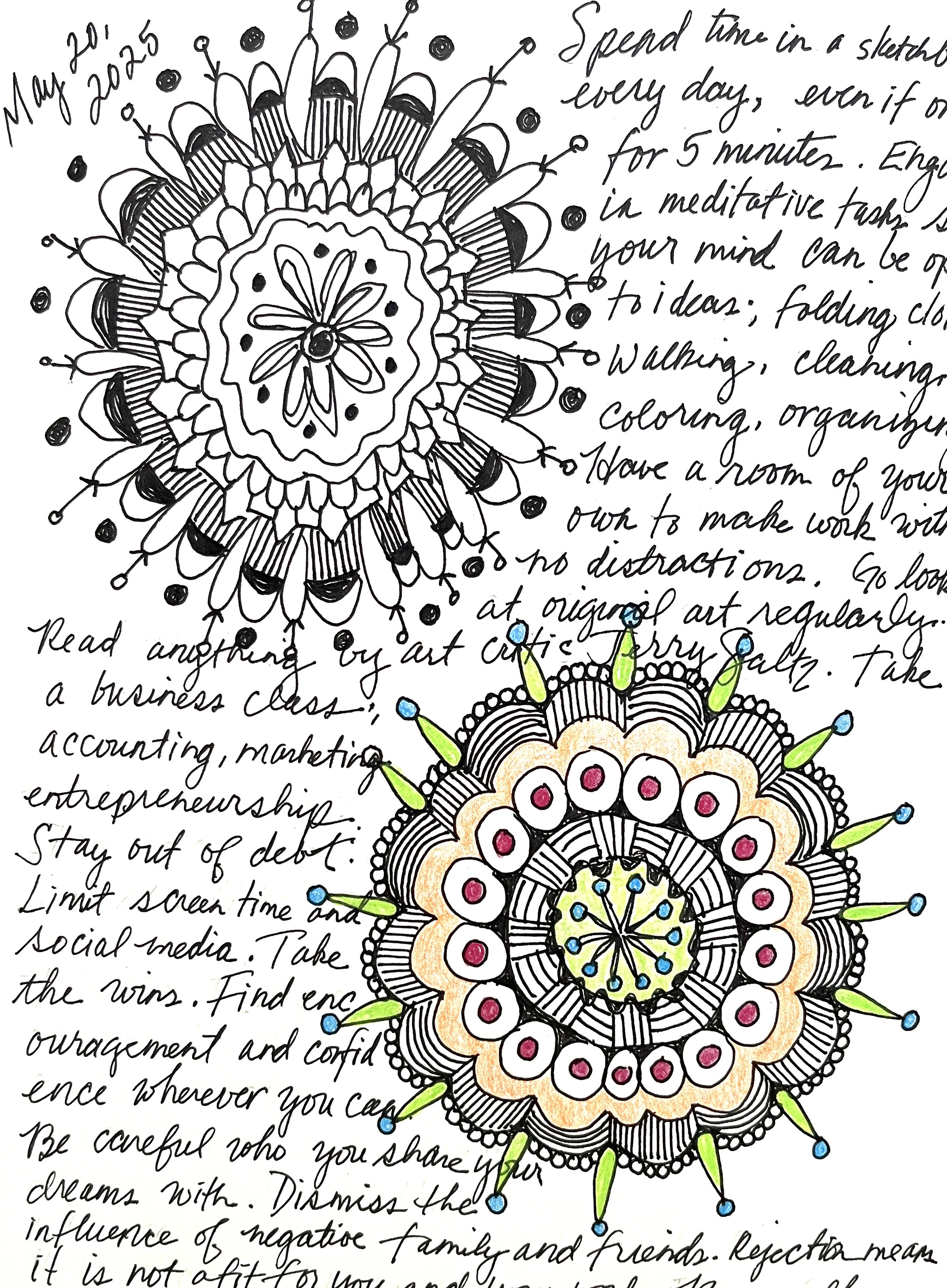
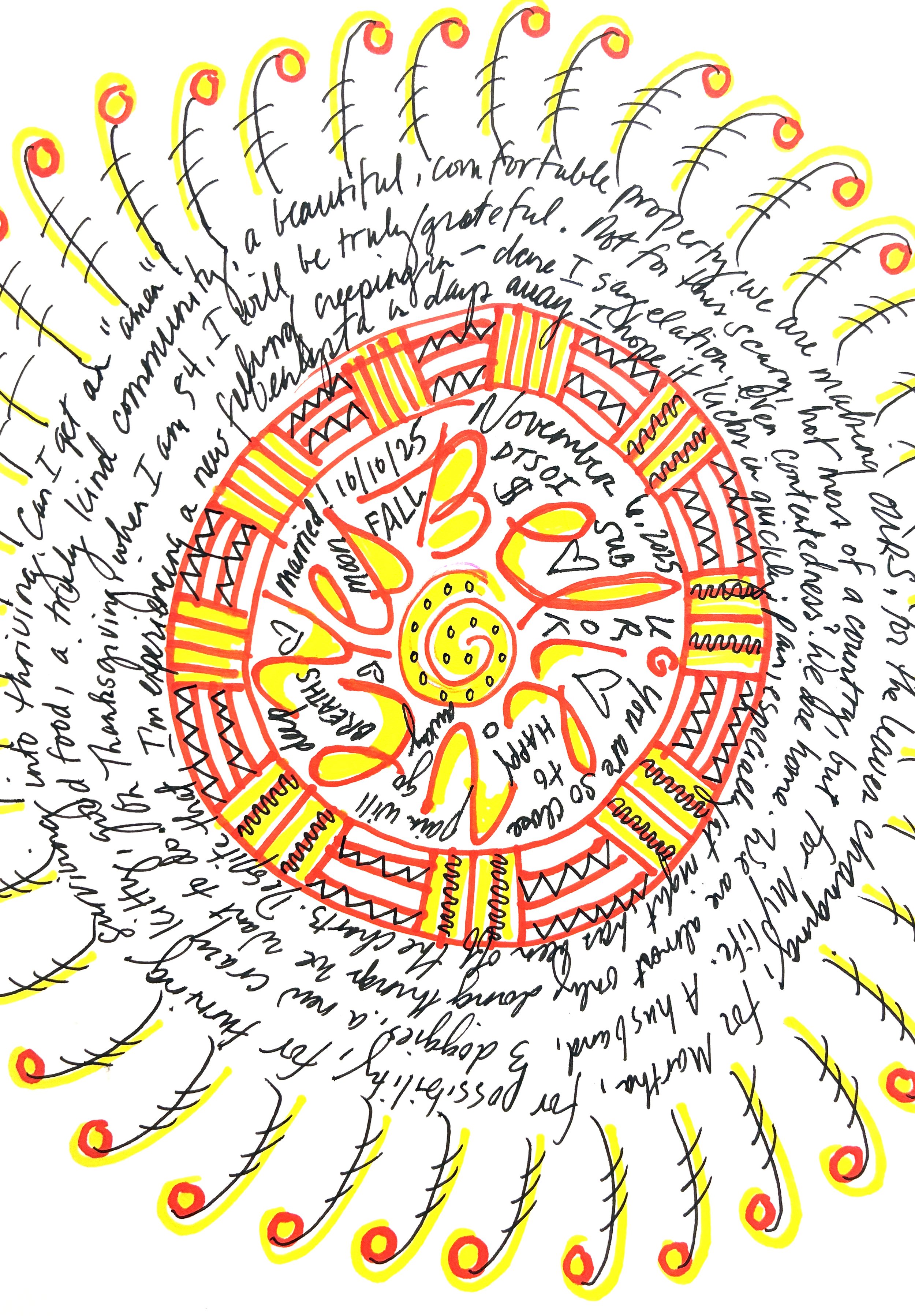
These mandalas are not large, finished pieces, but small drawings, paintings or collages in my sketchbook, usually done in one-three sittings. Sometimes they will have color, sometimes not. They calm me and create order in a chaotic world.
Meant as a daily meditation to get me back on track with my soul, my gut, my focus, my connection to the bigger picture.






Carl Jung
Carl Gustav Jung was a Swiss psychiatrist and psychoanalyst who founded the idea of analytical psychology. Jung was one of psychology’s pioneering figures of the 20th Century. He was a radical and inspirational psychologist and thinker who developed a characteristic and unique way of understanding the human psyche and its functioning.
Certain of Jung’s concepts and terms have entered into everyday language, such as introversion and extroversion, complex and archetype. More significantly, Carl Jung founded a system of thought which has directly helped very many people and indirectly influenced countless more, as well as having entered and influenced mainstream culture itself.
Jung and the Mandala
While familiar with mandalas in Eastern religions, Tibetan yantras, and alchemy, Jung recognized them as a universal human motif reflecting the mind's natural urge toward self-healing and order.
Jung believed mandalas are archetypal expressions of the Self, acting as a compass that helps organize chaos and restore balance when the psyche is fragmented or distressed.
Jung encountered mandalas in his studies of Eastern philosophy, alchemy, and religious iconography, but his most profound insight came from his own experiences. During a period of deep introspection, he noticed that he repeatedly drew circular, symmetrical designs that seemed to mirror his inner state. He realized that these images were not random but carried deep psychological meaning, representing the totality of the self.
Jung proposed that mandalas symbolize the Self—the central archetype that integrates the conscious and unconscious aspects of the psyche. He believed that when people create or engage with mandalas, they are unconsciously mapping their inner world, bringing hidden emotions, conflicts, and desires into conscious awareness. This process, which he called individuation, allows for psychological healing and personal transformation.
Mandalas as a Therapeutic Tool
Jung encouraged his patients to draw mandalas as a form of therapy, particularly those experiencing emotional distress or existential crises. He found that the act of creating a mandala helped individuals organize their thoughts and emotions, restoring a sense of inner harmony. The symmetrical nature of mandalas provided a sense of stability, particularly for those grappling with trauma, anxiety, or depression.